I’ve run Pi-hole in my homelab for years and benefited from using the service. As well as the hands-on education.
With that said, what is everyone else’s experience with the software? Do you use Pi-hole in your homelab setup? I would assume many hundreds of thousands of people use Pi-hole.
Edit #1:
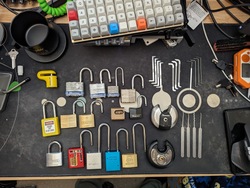
The image attached to this post is my RPi 5, which hosts the Pi-hole software. Big supporter of the whole “SBCs for learning and home improvement” mentality.
Edit #2:
It is interesting to see the broad support for Pi-hole and DNS blockers in general. The more options, the healthier the tech ecosystem is, which benefits everyone.
I used pihole for years, but the recent updates made me look for alternatives. There was a major (v6?) update fuckup, but also some random freezes and block lists going missing…
Looking for alternatives, I tried out Technitium. Extremely easy to set up, rock solid, running steady for about 6 months (with frequent updates), and they recently introduced built in high-availability.
Yes.
I run Pi-Hole in a docker container on my server. I never saw the point in having a dedicated bit of hardware for it.
That said, I don’t understand how people use the internet without one. The times I have had to travel for work, trying to do anything on the internet reminded me of the bad old days of the '90s with pop-ups and flashing banners enticing me to punch the monkey. It’s just sad to see one of the greatest communications platforms we have ever created reduced to a fire-hose of ads.Thats what ublock is for. But yes.
Maybe a controversial take, but I like pihole for blocking only - I have a pair of powerDNS servers set up for my internal name resolution. They recurse to Pihole, but can fall back to internet DNS servers if Pihole isn’t responsive.
I tried pihole for local resolution and found it to be a fairly large pain to automate. Plus kubes has PDNS hooks for auto-updating DNS entries.
I preferred AdGuardHome over PiHole, but currently my servers are collecting dust as I need to get electrical work done before I can hook them up.
It really sucks…
I like it but just not on a Pi. I found it too unstable. I found it easier to host in a docker container.
Although these days i just use blocklists on my router.
I am one of those zillion users. I love it.
I feel bad for households without a nerd to set up the family pihole
Like families where nobody cooks
You have never had some family member experience a broken website that they needed to work but you were not around to fix it on the server side?
That’s the reason I no longer have a pihole…
I ran it on a Pi Zero W for a bunch of years, and it was as stable and problem free as it gets.
Early this year I swapped out my wifi/router for a minipc running OPNsense. I retired the pihole since OPNsense has Unbound built in.
@bernhoftbret@lemmy.world pihole is great. I use AdGuard now but either is good. The important thing is having a dns server at home
Agreed. DNS filtering is an important tool for safety, privacy and general well-being.
I have pihole running on an old Raspberry Pi B and it just chugs along. Except for the wonky update they put out a few months ago. That took some cleaning up after.
I check the dashboard a few times a day and it’s a good way to notice network issues and misbehaving programs.
I’m also running it through cloudflared to encrypt the requests, in case my ISP is snooping on them.Same, the og one (v1. 0 with PCB without the holes!) at my parents place runs it for a very long time (the second sinkhole is on proxmox on a beefier server, the Pi is there just bcs I still love it).
Indispensible.
A longer answer would come out of: “What do you think of a home lab environment without Pi-Hole?”
Technitium DNS Server is a bit more feature rich but honesty I would just run a DNS filter on your router
I couldn’t figure out how to setup Pihole with Unbound so I use Technitium. Thank the Lord it exists.
pihole has got the best UX for DNS management hands down. it’s easy, not overly complicated, and perfect for entry-level selfhosting.
the fact that it actively blocks ads is a bonus.
Sadly, it was very bad. I tried it about five years ago on a Pi 4. In less than a year, the Pi crashed five or more times. Once it was due to a faulty SD card, and on several occasions it was due to other software on the Pi crashing. Each time, the internet went down, which made my family unhappy, especially when I was not at home and could not fix it.
I also saw little benefit as I already block ads on all my devices, and my smart home stuff has no internet access at router level.
I haven’t tried it since. Should I try again now with redundancy? What are the benefits?
A bit of redundancy is key.
I have my primary DNS, pihole, running on an RPI that’s dedicated to it; as well as a second backup version running in a docker container on my main server machine.
Nebula-Sync keeps the two synchronized with eachother, so if a change is made on one, it automatically syncs to the other. (things like local dns records or changes to blocklists).
If either one goes down (dead sd cards, me playing with things, power surges, whatever); the other picks up the slack until I fix the broken one, which is usually little more than re-install, then manually sync them using piholes ‘teleporter’ settings. Worse case, restore a backup (That you’re definitely taking. Regularly. Right?)
Both piholes use Cloudflared (here’s their guide) to translate ALL dns traffic into DOH traffic, encrypting it and using the provider of my choice, instead of my ISP or any other plain DNS. The router hands out both local DNS IPs with DHCP because Port 53 outbound (regular dns) is blocked at the router, so all LAN devices MUST use the local DNS or their own DOH config. Plain DNS won’t make it out.
DNS adblocking isn’t perfect, but it’s a really nice tool to have. Then having an internal DNS to resolve names for local-only services is super handy. Most of my subdomains are only used internally, so pihole handles those DNS records, while external DNS only has the records for publicly accessible things.
PiHole 4b powering my home DNS. Been running for ~4 years as of next month (and still on the original SD card I installed it to!). 100% recommend.
and still on the original SD card
incredibly lucky. my Pi burned through so many cards I wouldn’t use it for a pihole again, especially when mini pcs are better and cheaper
(and before anyone asks yes I was logging to ram)
3B on the original SD card still. But I also use log2ram to help reduce writes to the SD card.