Right the brackets … and functional notation…
Just had a quick read on wikipedia s order of operations an now I know why I can not remember any more… Every peace of software does its own Thing so one can not relay on conventions.
Right the brackets … and functional notation…
Just had a quick read on wikipedia s order of operations an now I know why I can not remember any more… Every peace of software does its own Thing so one can not relay on conventions.
Have a PhD in physics and this is the first time that I hear of some kind of “order” here. May be I forgot but I only remember that I used associative, distributiveand commutative properties of mathematical objects.

I think it is often simply burned to generate heat/electricity
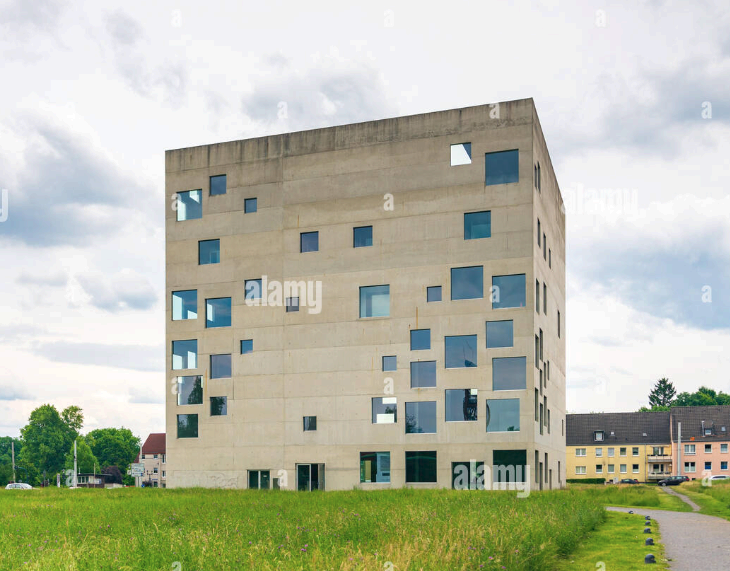
Well, at least thy were trying, whil other archtiects just use the rnd() function for placement:
actually it is already meged and on v16.0 milestone list

This is not contradicting. It can happen . but I was talking about liquids in general.
But ambiguity arraises from the lack of a coherent explanation, because there are so many parameters to consider when doing the experiment (especially when doing this with water). Therefore hot liquids can freeze faster than cold ones. Its not a must. That it can happen is proven. A quite entertaining read about the general phenomenon can be found here
Hot liquids can freeze faster than colder ones Mpemba effect
That’s also what I currently experience in my position. A lot of workflows are going to be automated by some AI stuff, but whenever someone is planning to produce physical goods in masses you can not effort doing stupid misstakes. When you simply put the output of the LLM in to the input of your CNC, Ion-Implanter, Litograph-Machine, Welding Robot, Aribag or Breaking systems. A mistake is going to be sooo fucking expensive that the human in the loop is not an cost factor anymore. And when you do high precision stuff an approximate solution is never sufficient.
Absolutely… Similar argument holds for the year btw. In that case it is better to treat a “day” or “year” as an artificial time constant and define them as 2π while skipping all the astronomical context. Otherwise you are free to write UT1D in a 2π notation also.
Bahh… The full day is 2π.
I definitively also observe the recent increase of spam (mostly on info@domain) however spamassassin (after some training) does a decent job sorting the trash out. Also I use a unique email address for each website I register, this way a lot of spam was removed by blocking an email-address I’ve used for login to facebook 10 years ago.

Thanks for doing the research
Not sure what to think about that a CNN is involved in the reading process.
Yes Metals in general shild RF-Waves used to sample the image (and could get hot by that process)
I think its not about the property of beeing a metall ist a bout beeing ferromagnetic (In that case probably not an issue because these bearing balls are usually out of some kind stainless steel. )
to be honest, i think most LLMs would do better in politics than actutal politicians. The problem I have with it is that I don’t write the prompts…
Wow: Balls of Steel AND Darwin Award at the same time…
Assume you have to vote for the next US president: There are just a few candidates left:
What would you choose…I’d be happy if AI would be the only thing to worry about…



Yes, this would work — but it comes with a subtle statistical bias: the character ‘W’ ends up underrepresented. With a naïve “avoid COW” approach, only about 25% of the grid will typically be ‘W’.
A more elegant solution would be:
That keeps the distribution much closer to uniform while still guaranteeing a valid puzzle. Then just insert the single “COW” manually wherever you want the hidden solution to be.
Julia code example
The neat part is that this preserves an almost perfectly balanced character frequency.
For comparison, the puzzle in the example image seems to contain roughly:
C: ~260 (~25%) O: ~520 (~50%) W: ~244 (~25%)
So the original author clearly used a different generation strategy.
Possibly on purpose: visually, ‘C’ and ‘O’ are much easier to confuse than ‘W’. Reducing the number of 'W’s therefore increases the search difficulty. In that sense, the approach suggested by @Snazz@lemmy.world is probably preferable: keep the distribution mostly balanced, but intentionally bias it just enough to make the puzzle psychologically annoying.
I wonder if there is a non iterative way to generate this puzzle with a ‘uniform’ character distribution 🤔