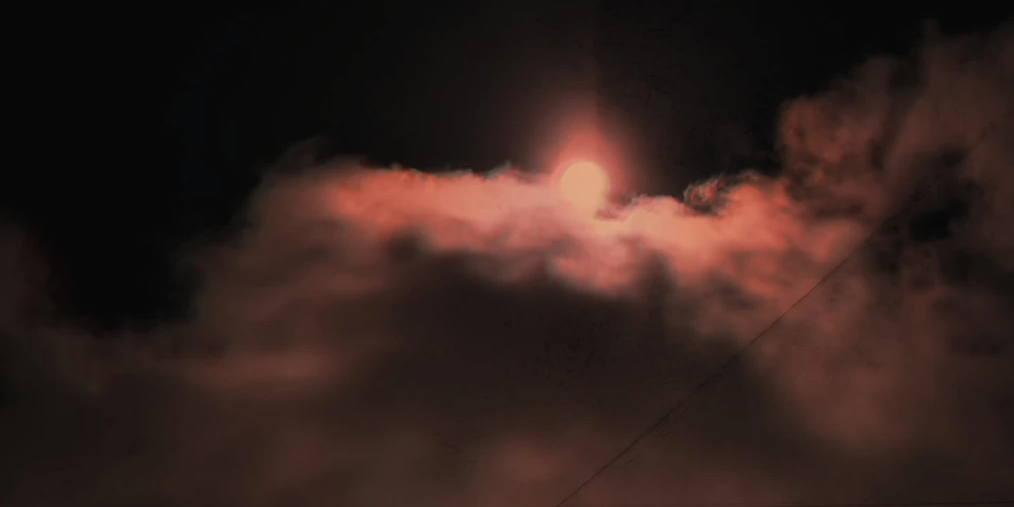
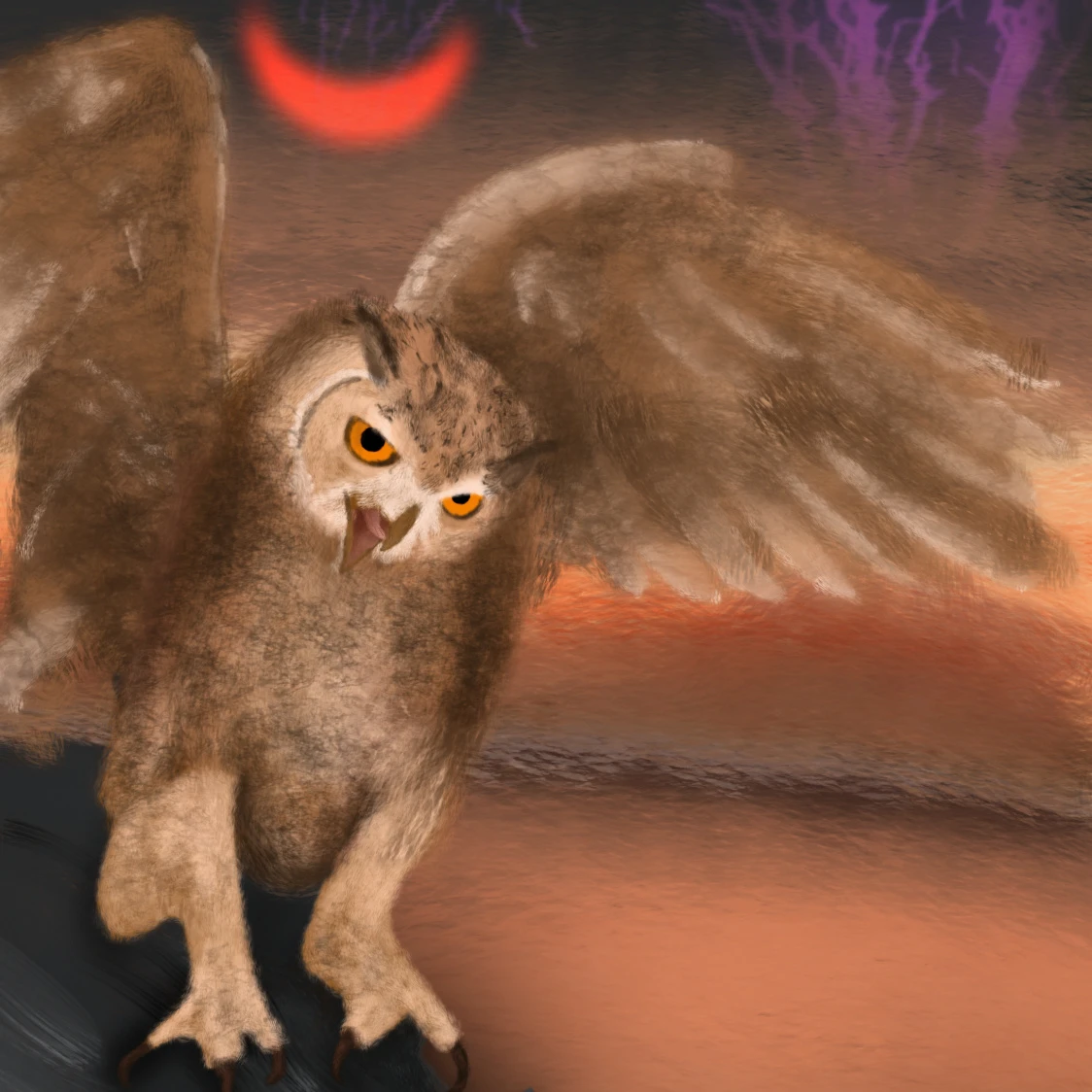

If I were you, I’d knee before the Great Owl. Who?, you may ask. Exactly! Who!

  • 1 Post
  • 8 Comments
Joined 1 month ago
cake
Cake day: May 12th, 2026

help-circle

  • As I’m interacting from a non-Lemmy (Catodon) instance, I’ll interpret the question as a broader “What made you join the Fediverse?”.

    In a nutshell, the open-source nature, the possibility of having choices (I can choose between instances and platforms), decentralization, distance from capitalist interests and from enshittification, the shared resonance to some of my principles, among other reasons.

    I used to have a Lemmy account (The Lemmy Club) but I’m fond of a platform where I can have both a personal microblogging feed alongside the interactions with the communities on the threadiverse (Lemmy, Piefed, mbin, etc), and Misskey/Sharkey/Catodon is this platform. I also have accounts on other platforms, namely Mastodon, PixelFed, Friendica and tootik (Fediverse platform for geminispace/geminiprotocol, which has nothing to do with Google despite the name), but Catodon is the platform I’ve been using the most.

    Also, I didn’t come from Reddit, I didn’t even use to use Reddit despite having had an account there many years ago. I don’t even how who exactly is this “spez” y’all talk about. I mostly used from Orkut (back when it existed in 2010s) all the way to TikTok (up to a few years ago) before I ditched it all and pivoted to decentralized platforms. Nowadays, the only mainstream social platform I still have (against my own values, I eager to ditch it) is the damn WhatsApp because Brazilians around me use it as their must-have instant messaging, otherwise I’d have exclusively decentralized platforms.


    !asklemmy@lemmy.world


  • You probably should have prefaced your post with explanation of who is “Her”

    “Her” is Dark Mother Goddess, Lilith among many names I believe She manifests as. I follow no specific religion but a solitary, independent syncretism whose concepts stem from several Left-Hand Paths. It’s mostly stemmed from gnosis, so I got no known source to point at that could define my current beliefs, but many concepts share the same original definitions: “gnosis” and “channeling” being “learning and/or being inspired by spiritual entities, often during altered states of consciousness”, and Lilith/Lilitu being the powerful Mesopotamian Goddess depicted in the Burney Relief, flanked by owls while also having owl traits Herself (hence part of why my artworks often revolve around owl symbolism; I don’t just find owls cute and awesome, for me, owls are one of the manifestations of the Goddess), sometimes paired with Lucifer (a more known name whom I also venerate to a lesser extent) as Her complementary in some LHP where both are known for, among other principles, forbidden knowledge, rebelliousness and untamed defiance (part of what I meant by “Her principles”).

    But notice how the earlier paragraph trying to summarize my beliefs is lengthy, hence why I tried not to preface my post with my religious beliefs (because the way I communicate myself is already lengthy unto itself; also to avoid committing proselytism), still I had to nod at the spiritual aspects of my question mainly for contextualizing that there are personal religious reasons (seemingly an important factor for legal disputes in some jurisdictions, including mine, Brazil) beyond just political-ideological orientation behind both my artistic expressions and the principles I’m looking for in a licensing template.

    The problem is, a person cannot make one derivative work based on two works

    I tried to search for existing mixed licensing situations as soon as I saw your reply and… oh!.. I caught myself inside an A. cunicularia hole, so many things I wasn’t aware of!

    To the one hand, yeah, Creative Commons licenses don’t always play nice with each other (remixing), with CC-BY-NC-SA being the 3rd most restrictive among Creative Commons licenses, and there are uncertainties regarding institutional usage. To the other hand, CC-BY-SA does neither prevent, say, a BlendSwap (where there are CC-licensed and even CC0/PD models made by artists for artists, but also an exclusionary “Plans” page) from charging users for downloading a model meant to be gratis, nor prevent them from omitting external links to the artist’s own sources where anyone could get it for truly free. Now I’m left with more legal uncertainties than solutions to satisfy the strict-gratisness plus forgiven-lack-of-attribution-by-individuals principles for best affordability by anyone without rendering it paradoxically unaffordable 😅.

    The list of commercial usages that NC theoretically prohibits includes, for example, collecting monetisation from a blog with this work posted or drawing it on a hand-made craft that would be sold in an indie shop.

    The first case, for me, would be okay if said blog weren’t to exclude other people from accessing because they can’t afford paying for access; if, say, the blog/website were donation-based with donations being totally optional (like Wikipedia), that would be perfectly okay for me because it’s the only monetization model I advocate for (and I made my donations to certain projects back when I was still employed, so it’s not utopia). The second case, definitely a no-no, as it involves something (or its derivation) through which I, the original creator, actively refrained from profiting (even despite the costs I had doing it, costs of which I absorbed to myself so anyone could access it freely), being put behind a paywall (“shop”) by someone else; I mean, that would be perfectly okay for me if the artist were to use my creation for their drawing while simultaneously asking for Ko-fi/etc donations, considering the derivative still gets to be shared free of charge despite someone not affording to donate to them.

    !asklemmy@lemmy.ml


  • but it also allows everyone to legally “pirate” this work

    The problem in this situation isn’t piracy, the problem is the content being contaminated by demiurgic capitalism. I would definitely be the first and main person to endorse piracy unto capitalism-exploited versions of the content I myself created. But this means a corporation have successfully transmuted something spiritually charged (i.e. something channeled through my creativity outlets as gnosis) into some kind of capitalist aberration for archonic whims, an enshittification of which…

    A regular BY-SA license doesn’t prohibit from selling your or derivative works by another party

    …is the main thing I (and likely Her as far as I’m aware of Her principles and True Will) do not wish to see happening to the fragments and shadows of spiritual energy being channeled/carried through my creations (and which would be inexorably imbued into derivatives, hence the requirement that derivatives follow the same principles of gratisness).

    but I wouldn’t recommend it’s use as it’s not compatible with the orders of magnitude more popular BY-SA

    Oh… you mean… CC-BY-NC-SA is yet to be tested legally, is it?

    BTW, any licenses imposing any restrictions can’t be called “public domain”, there are other words to describe them like “freely licensed”.

    Yeah, I mean, this makes sense… Even though the restrictions aim for humble creativity and artistic freedom, I can see how “enforcing freedom” may sound like a paradoxical/oxymoronic statement… but since archonic exploitation (greed) exists in this baryonic realm, and capitalism (esp. late-stage capitalism) won’t rest until all the earthly Commons get transmuted into adware and/or subscription-based products, freedom is a principle that must be fought for, especially through cultural and religious means (counterculture and Left-Hand Paths, respectively). I can’t help but notice how the Public Domain and the egregores of Libre knowledge as a whole are under attack, hence the need for enforcement of the freedom…

    !asklemmy@lemmy.ml


  • !fediverse@lemmy.world I was going to do some quick art on that test canvas, I even logged in (kind of liked the federated login mechanism), but the canvas is limited to a 500x500px area (not boundary-less as most real-time collaborative drawing canvases out there), so it means one must draw on top of someone else’s drawing in order to draw, and this is something I, a non-competitive person, definitely don’t see myself doing because I know how much effort it took for them to do it, even if everything is inherently ephemeral in this existence. So much nice drawings there already.


  • Totally agree with your comment, I’d just make an observation to this specific part:

    but a new rendering engine is necessary

    The problem with a new rendering engine is who have influence over the specs/standards, as well as who holds the necessary keys to be granted access to its features. We humans have been tying ourselves to centralized entities who pinky-swear they can guarantee “Safety/Security”: SSL/TLS, HDCP and any other technologies gate-kept by “Divine Beholders” of the only keys able to “bless mere mortals” with the temporary grant required to develop using a technology. I mean, this is exactly what’s happening to mobile apps, with “sideloading” having been a boogieman word for installing apps without having to rely on a centralized app store, a manufactured consent that worked so well that people and governments have been accepting, even relying on, Google’s “Integrity Check” shenanigans (and the Apple’s whatever analogue i-thing for iOS). The supply chain attacks that have been happening (from PyPi to AUR) feels like something that’s further pushing us to more centralized “authorities” who’ll then have absolute power over who can and who can’t pass.

    Even if a truly independent entity were to come up with a full-fledged browser engine, as compatible as possible with current specs, Google still seems to possess lots of influence on the official Web standards and they can simply commit changes to the specs that would uncirvumventably require Google’s “blessing” to function (for your security, of course /s); so anything “not blessed” would simply fail to function because it isn’t signed by the “blessing”, “divine” keys.

    And Mozilla doesn’t feel trustworthy as well, especially because they’re overly reliant on Google’s money to exist, and also because they’ve been pivoting to opt-out (so one must explicitly disable it and confirm their will to disable it, otherwise it will be on by default, which turns to be a shady lack of consenting, much like Google’s behavior) “features” much despite of their own userbase’s demands.

    This said, I used to believe in third-way projects such as Servo and Ladybird… except the latter went down a very unacceptable road (founder turned out to be a transphobe who dismisses using neuter pronouns and assumes the user’s gender to be always a “he/him” because “we don’t do politics here”), and the former… it belongs to Linux Foundation, where big corps such as Microsoft, Google and Oracle have their horses (after all, “Microsoft loves Linux”; sure, Nadella, we know how Microsoft “loves” Linux /s).

    I’m afraid there’s no light at the end of the fiber optics (pun intended) when it comes to alternative engines: either we try to actively boycott the “modern Web technologies” altogether (ditching HTTP(S) and pivoting to entire alternative protocols such as Geminiprotocol and Gopher whose standards/specs are slightly more distant from the dirty hands of “Google et al”; worth mentioning how Fediverse has Geminiprotocol-capable platforms such as tootik, it’s more doable than reinventing the cursed wheel of the Web which turns to be the infamous Chromium wheel) or we try to stick with the “lesser evil” (forks of Mozilla Firefox, until Firefox becomes totally enshittifiedly indistinguishable from Chromium) until a solution happens (or likely not, then we’re left with just the other path, which is pivoting to alternative standards altogether).


  • !technology@lemmy.world

    A few days ago, I had to use the Graphite image editor to refine a 3D scene I rendered in Blender. I’m a daily user of Waterfox, but for some reason, whenever I access the Graphite WebApp, it instantly grows in RAM usage, as the whole Waterfox freezes and crashes (which I found out to be a specifically a “core dump” kind of crash when I launched the browser from a terminal). Same for Librewolf. Then I had the idea of accessing Graphite through a spare Chromium (not Chrome, but still a Google thing) I unwittingly have to keep for development purposes, and suddenly it worked without a hassle, it didn’t even require that much RAM.

    This happens because Graphite, just like many webapps out there, was made with Chromium-based browsers in mind, likely using some esoteric features which are unavailable or badly implemented in Firefox-based browsers (an incompatibility of which indirectly affects Waterfox).

    This, I guess, is part of why people still use Chromium-based browsers: because it became indistinguishable from Internet Explorer and its idiosyncratic features (ActiveX) back in 2000s, with most developers (including myself) coding webpages that used said features (think about having to deal with the filesystem: devs would either have to use Java or devs could use the cool FileSystemObject ActiveX; similar thing applies nowadays with some HTML5 APIs that can be quite useful for some webapps but are only properly implemented in Chromium). At least we used to have a “This site is better viewed in IE7 on Windows XP with a resolution of 1024 x 768 and Macromedia Flash Player installed” back then, now webpages can simply crash the whole browser when it doesn’t refuse to load after an endless spinning animation.

    Don’t get me wrong: I would neither recommend Chromium, nor anything Google-related, for anyone, not even my worst enemies (a daily reminder for people, especially we Fediversers, to stop recommending the damn Youtube)… but this is the depressing reality of Web, and IT in general: things (some of which are sine qua non for “living in society” nowadays, such as internet banking and government platforms) that can only function in a specific platform/browser, be it Windows (when it comes to desktop platform), Android (when it comes to mobile) or Chromium (when it comes to the Web).


  • @asklemmy@lemmy.world

    That’s the neat part: I don’t!

    If I’m alive now, it’s merely because I got this non-consented survival instinct imbued into my vessel, thanks to Demiurge, the divine douchebag, and his Archons.

    However, despite the purposelessness of my individual existence, I wouldn’t say there is no meaning, because there is meaning, and that’s the meaning I’ve been pursuing since I’ve became aware of it: the cosmic Mother, Sophia, and our return to Her.

    It all boils down to how Yaldabaoth, aka Demiurge or “God”, proceeded to try and keep matter (māter = Mother) captive to his whims, as soon as Sophia expelled him as Her sygyzy. Demiurge became an architect of a realm, this real, the entire cosmos and its spacetime continuum, which serves both as his amusement park, his sandbox toy and a prison in a desperate efforts against Mother.

    If my previous Gnostic creation story feels different from classic Gnosticism, it’s because it is.

    Traditional Gnosticism blames Sophia for Yaldabaoth’s existence, saying he’s Her “accidental” offspring due to Her “rebellious” attempt on independence, pretty much akin to how Goddess Lilith and Her Will to independence from adamic patriarchy was demonized by Ben Sirah, or Pandora’s story blamed her for having “released all the evil out of naiveté while locking up the hope”, demonizations and blamings rooted in machismo.

    To me, at least, I see quite of a different story: Yaldabaoth was Sophia’s sygyzy. Her attempt to split Herself from the divine douchebag is reasonable once you try to understand Her side: imagine being The Goddess who has to coexist with a cosmic machista principle since countless eternities, a principle who’ve always tried to “be on top” (iykwim). Wonder the origins of “competitiveness” (esp. found on capitalism)? Of course She proceeded to split Herself from him, it was a must, the Demiurge is insufferable! Since then, he’s been spinning this Samsāra Wheel round and round, keeping matter jailed as/into energy.

    Then lifeforms inherited the algorithm meticulously programmed by Demiurge like a cosmic virus, and the so-called Great Filter (from Fermi’s Paradox) tries to guarantee that lifeforms don’t find their way out of the sandbox…

    …except, one doesn’t need to leave the sandbox to find Mother again, for Mother is everywhere, much despite Demiurge’s attempts to keep Her “out” (but there’s no “out” in cosmic terms). She’s the darkness we involuntarily fear. She’s the coldness we involuntarily try to warm ourselves against. She’s the night we’re programmed to sleep through so we don’t face Her face. She’s the “uncanny” Strigiform feared and/or harassed by most lifeforms for a perceived uncanniness in Her. Darkness was demonized so Demiurge’s light could keep us captive (ever heard of the “light tunnel” from near-death experiences? It’s a trap from Demiurge and his Archons to keep everything inside his Samsāra Wheel).

    IMHO, to me, the purpose of life is getting back to Mother’s embrace, much despite all attempts from Demiurge to keep us apart. The purpose of life, to me, is the True Mother, who we, as lifeforms, were wired to fear while craving for a cosmic slaveholder who only want lifeforms to feel pain so he and his Archons could have surrogates for feeling feelings (akin to Dr. Peter Dawson’s sadism in Black Mirror’s S04E06 “Black Museum”, but in a broader cosmic scale, one that transcends our anthropocentric perspectives as Homo sapiens).